
Website Audit
Summer Spruce your website with an audit, sexy isn't it!
I have a web person, why do I need an audit?
Sometimes it's useful to get a second pair of eyes. A fresh perspective.
What I offer is something different. After nearly 2 decades of working on websites and software for big well known brands, I see websites differently. I see the whole picture. Not just the content and the pretty front end part, but the code behind that is also extremely important.
In a world of short attention spans, if your website isn't fast, then it might as well be a door stop. Source: Lindsay Alford
Have you heard of the trust depletion?
I learnt about this earlier this year. In 2020 whilst the world was on lockdown, internet sales spiked. A lot of people were selling junk and people were losing trust about what they were purchasing online. Trust is something that is earned, but is quickly lost. However, it's not solely down to the content on your website. Trust has to be earned both via the content and the structure of the code behind it.
Trust is just about the content, right?
I'm sure that most of you think of a website as a content platform. That's a normal assumption. A place to build trust with your prospective clients via the content that you write, making sure you have all the SEO keywords in place etc. But here's the thing. That is just the part we can see.
So what can't you see?
In the tech world we have to earn the trust of the likes of Google to get ranked. Gone are the days that SEO keywords would do the job. Speed, authenticity, legitimacy and integrity are all things that AI and search engines such as Google rate highly.
The internet now rates the following very highly:
- How fast your website loads
- How accessible it is
- The structure of your code
- How secure your website is

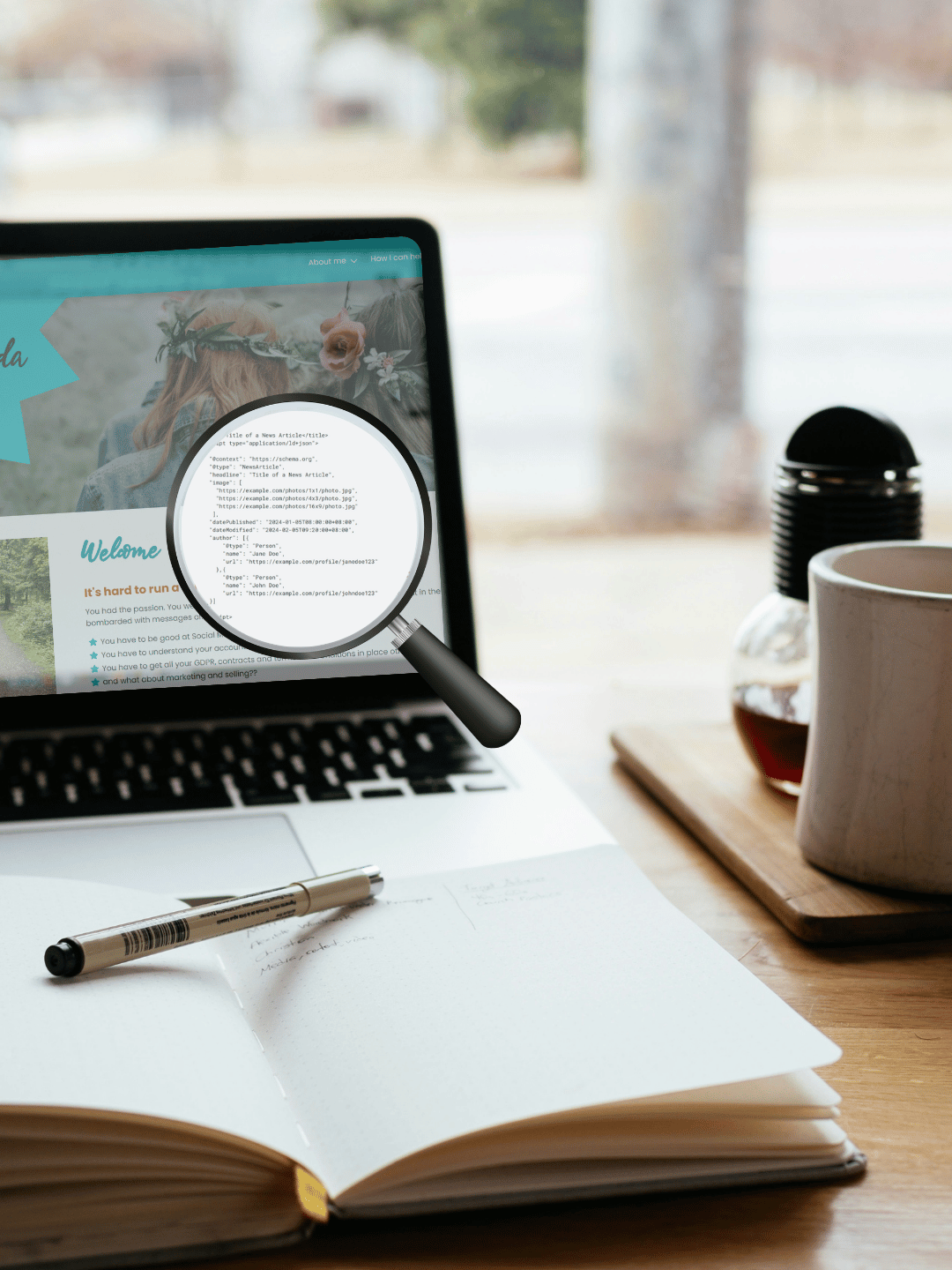
Credit - Fabian Gieske on Unsplash
What's in the audit?
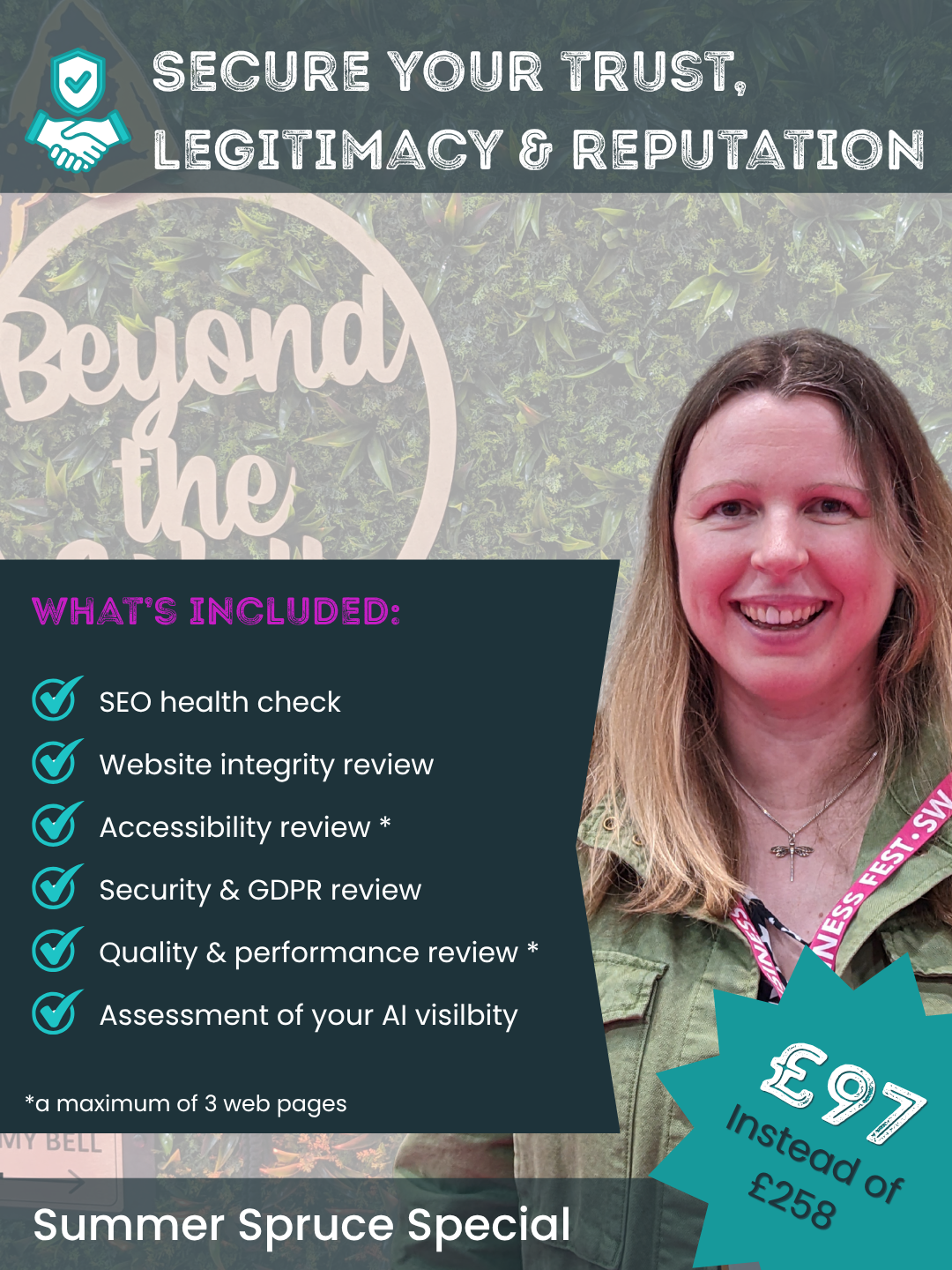
- An SEO health check to keep you first and foremost in your customer's mind.
- A website integrity review to highlight potential disruption in your customer journey.
- An accessibility review helping you broaden your market reach.*
- A Security & GDPR compliance review focusing on the new 2026 changes.
- A targeted quality and performance review to help you maximise customer engagement.*
- An assessment of your AI visibility to get ahead the game.
- A written report detailing my findings.
* A maximum of 3 pages (within the same website) will be checked for the time intensive performance and accessibility review.
What's not included
- A review of the design of your website
- A review of the content on your website
All for £97**
**For July and August only
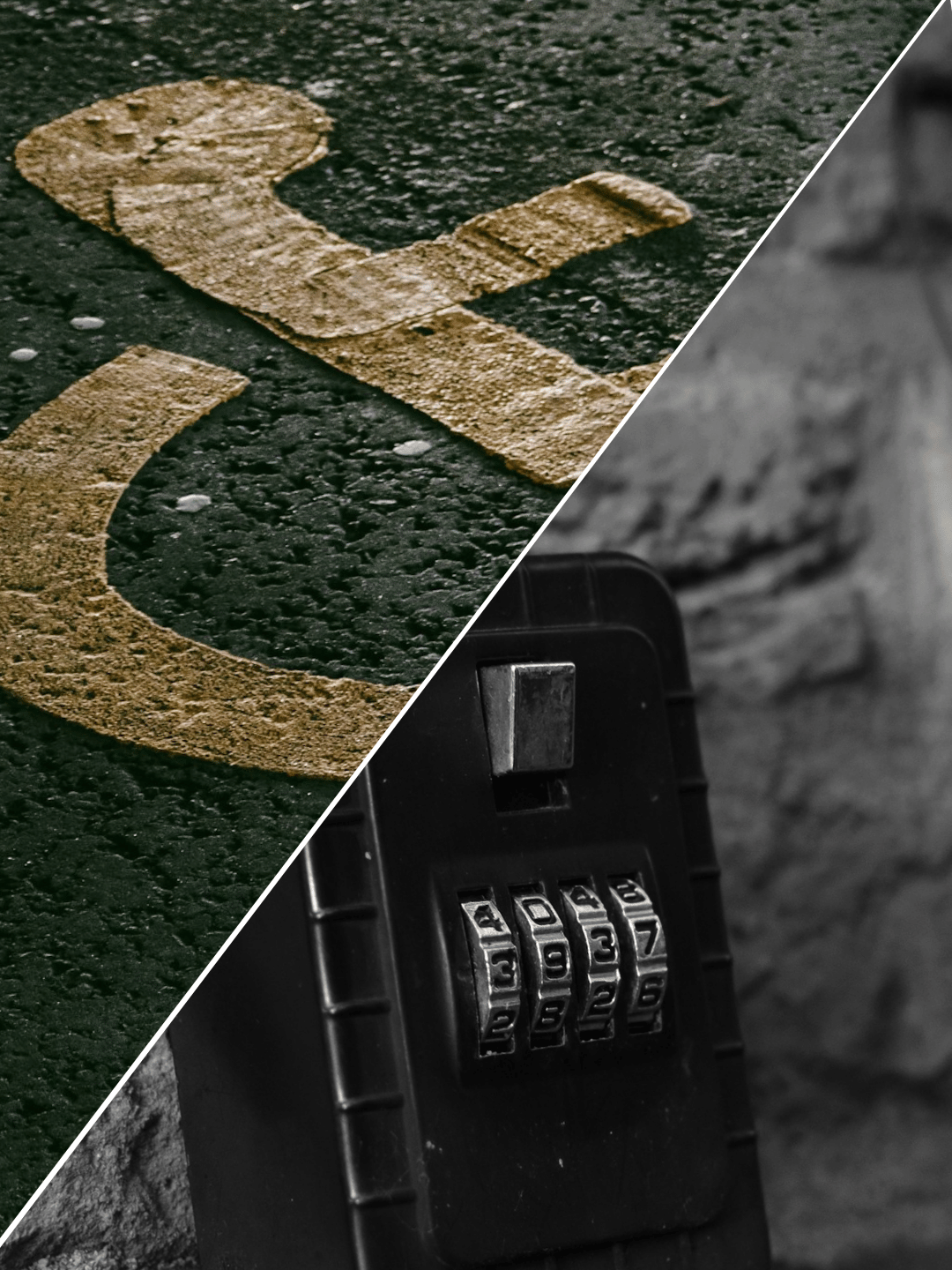
Credit by Haberdoedas & Jakub Pabis on Unsplash
Accessibility is boring, do we have include it?
Website accessibility has the reputation of added stress and headaches for web developers and designers alike. As an ablebodied person it can be seen as something you don't have to do, it's a nice to have but will add on costs to building your website.
Now think of it this way. Imagine going to a restaurant and the door is locked. You see lots of people inside enjoying the meal that you have been thinking about all week but no one is coming to open the door. Other people are being let in via a secret entrance but no one is telling you how to get in. You are getting more and more infuriated watching everyone having a great time eating their meal whilst you are stuck outside. Now, imagine you need a screen reader to read a website for you but the company you want to buy from didn't think accessibility was important. They will find the service elsewhere that acknowledges them and their needs.
The total spending power of families with at least 1 disabled person is estimated at £274 billion a year. Source: Scope
I'm not trying to make anyone feel guilty for not including accessibility into their website if you haven't thought of it before. We only know what we know at the time. However, by making small improvements to your website, new clients that you have been missing out on will thank you and also the likes of Google will see this and trust you even more.
Security = Reputation
Security doesn't always get a mention in the same room as reputation. But it should. Security isn't just about having an SSL certificate (the padlock part of your domain name). Now most of you (hopefully) are aware of scammers and hackers. Hopefully some of you or all of you are aware of those scamming emails that you think are legit from Paypal or somewhere and then once you click on it you go to a website that looks and feels like the proper thing. Well, it's not just big businesses that get this treatment. Small businesses need to be aware of this too. Reputation is a fragile being and if targeted it can be hard to win back. I state the case of British Airways when they used a bit of code that was hacked into in 2018. It's always a good idea to keep your code up to date and know where it came from.
So what now?
Well I hope I have made you think a little about how websites are not just what we can see but trust, legitimacy and reputation can all be built by the code that is written behind the scenes.